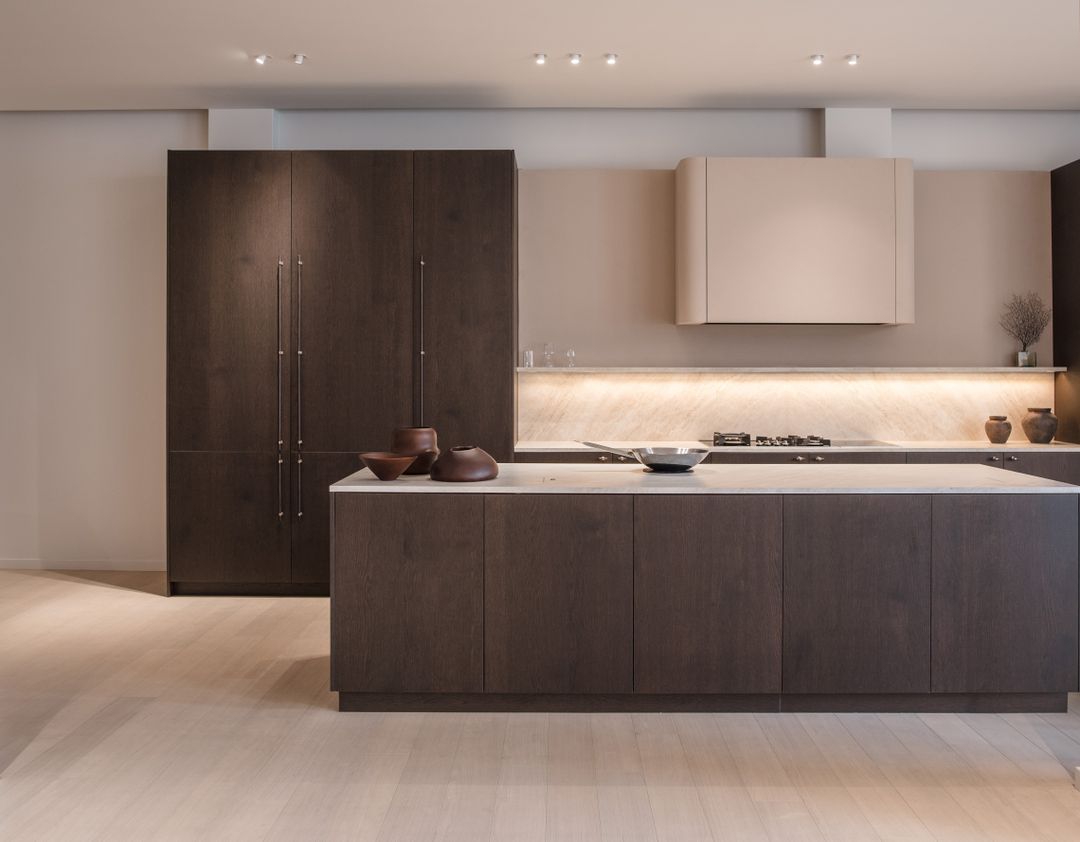
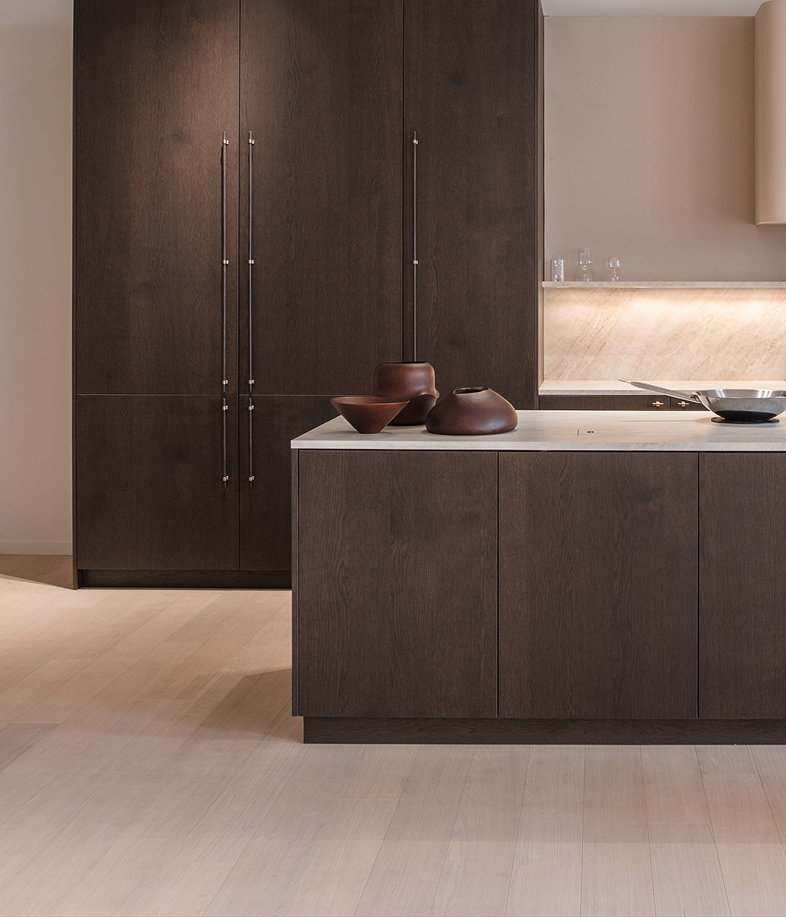
Hoods
)
Extraction engineered for every kitchen
Choose from wall, island, ceiling, downdraft, built-in, and integrated hob extraction to suit any layout. Our hoods deliver powerful yet remarkably quiet performance, keeping the air above your cooking clear while complementing the design of the kitchen rather than competing with it.
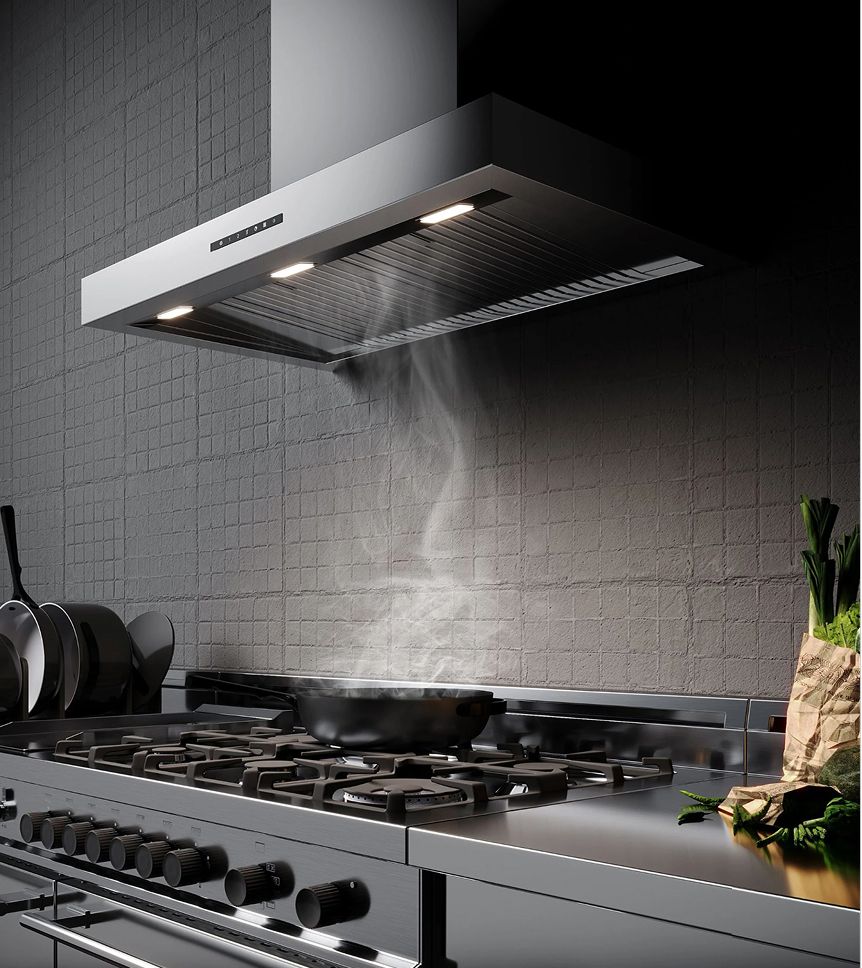
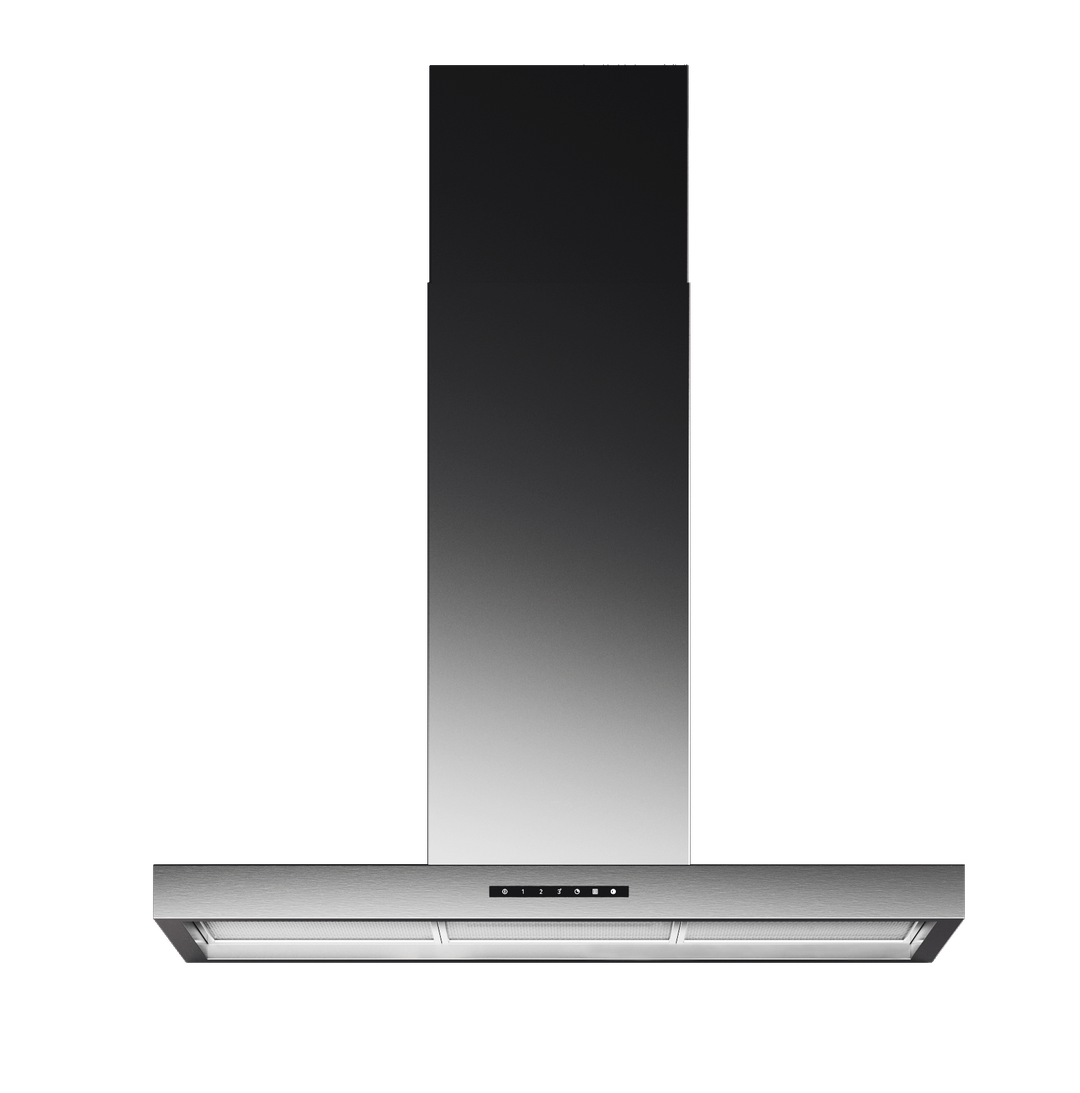
Wall
Mounted against the wall above the hob, the wall hood is at once a functional cornerstone and a design statement. Commanding extraction is presented within a sculptural form that draws the eye while keeping the air above your cooking clear.
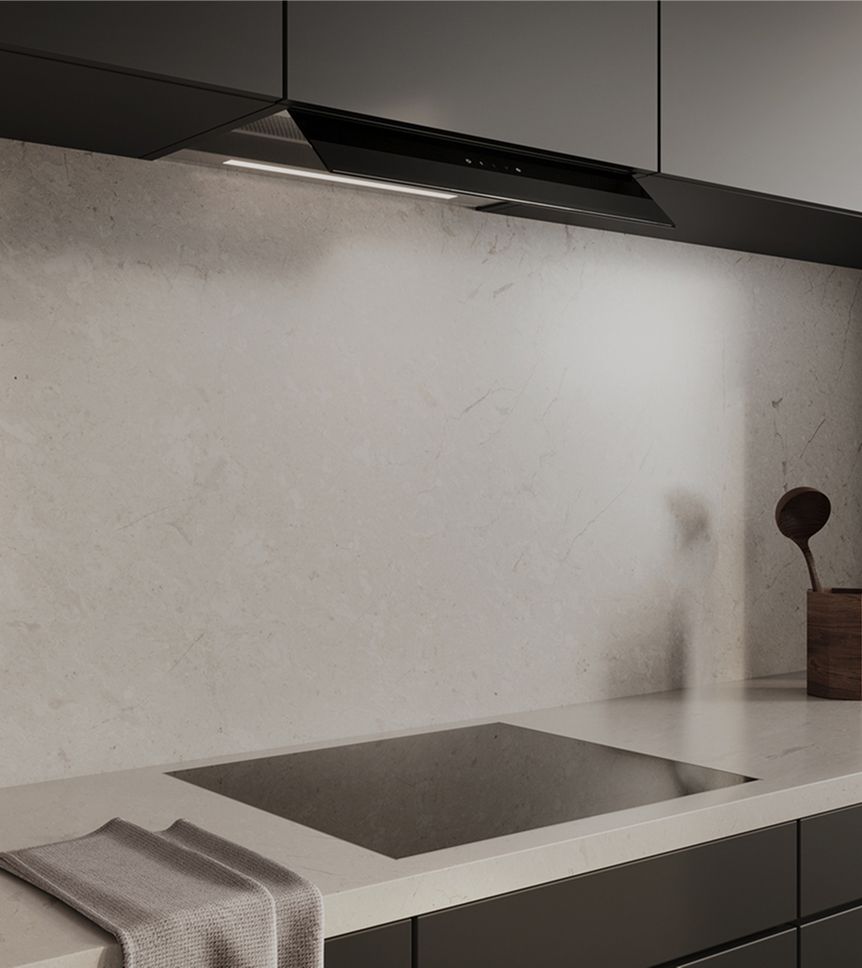
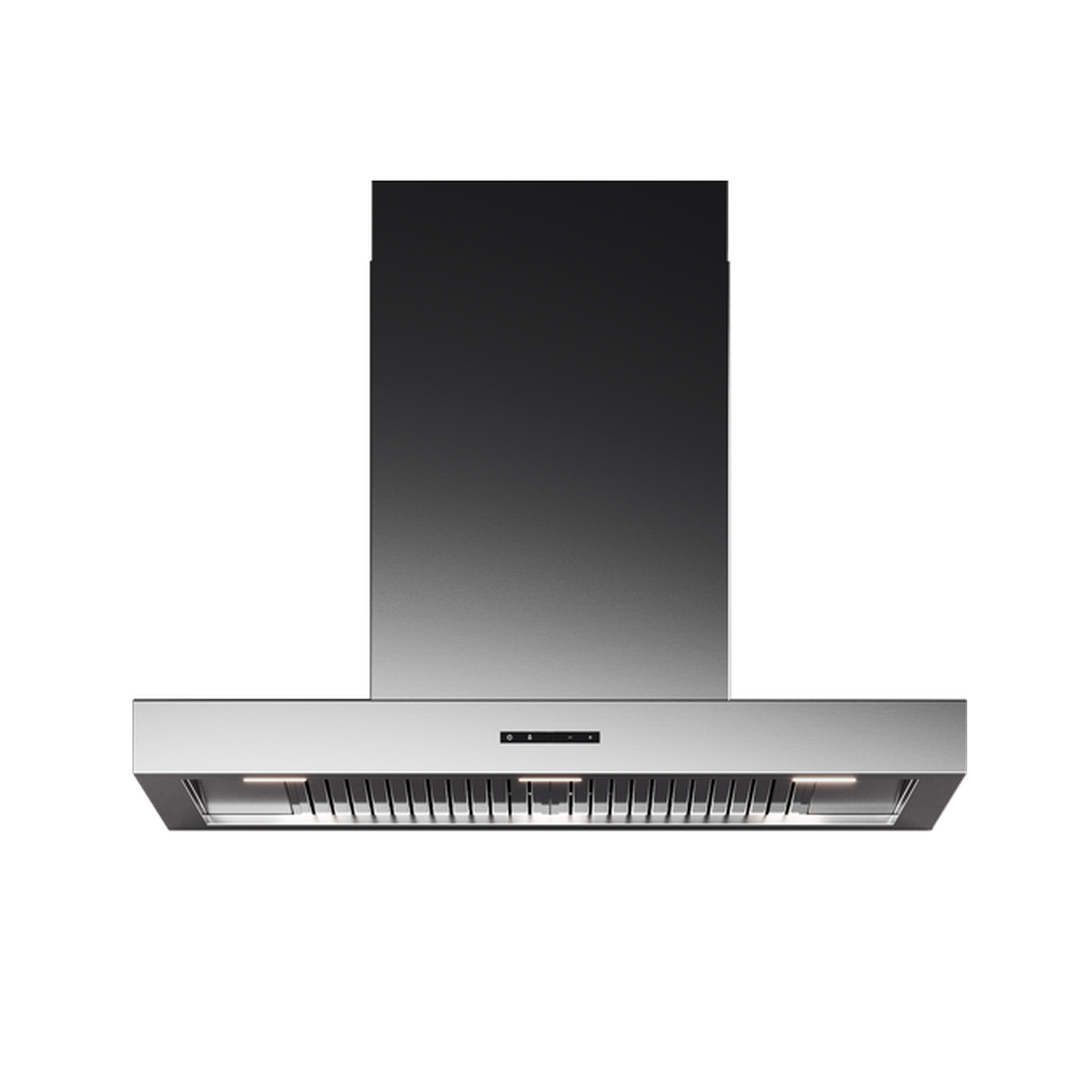
Built in
Concealed within a cabinet or canopy, the built-in hood delivers effective extraction while remaining entirely out of sight. It is the natural choice where a restrained, uninterrupted aesthetic is desired, performing discreetly behind the lines of your joinery.
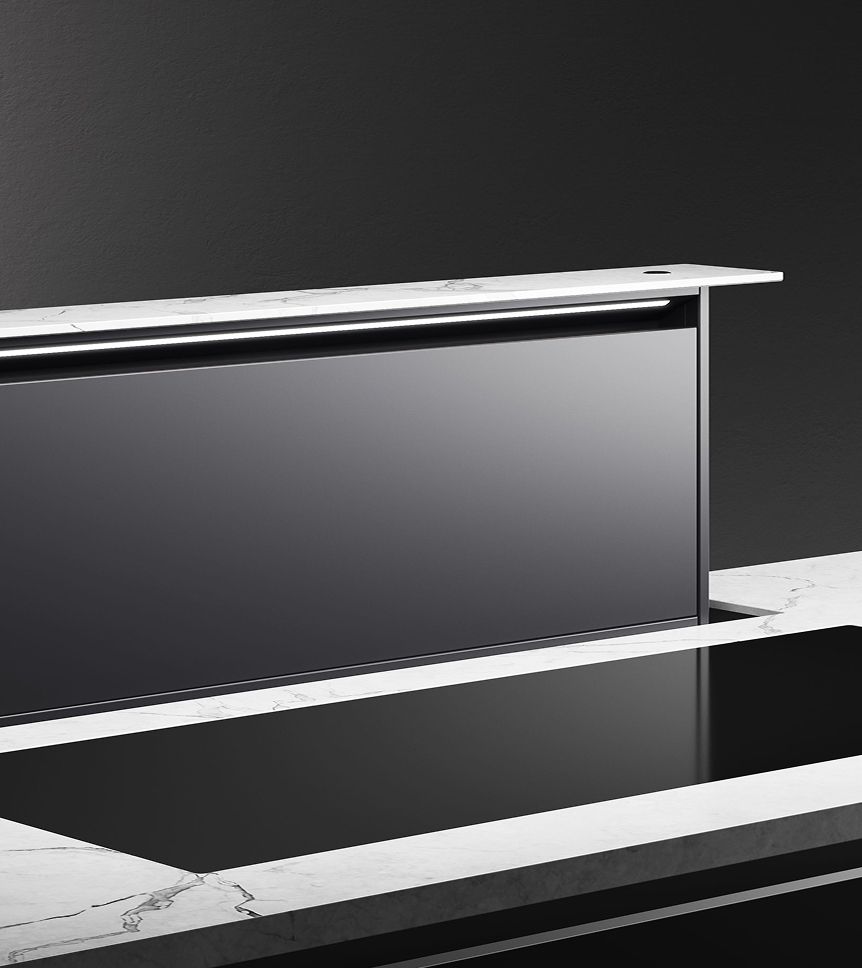
Downdraft
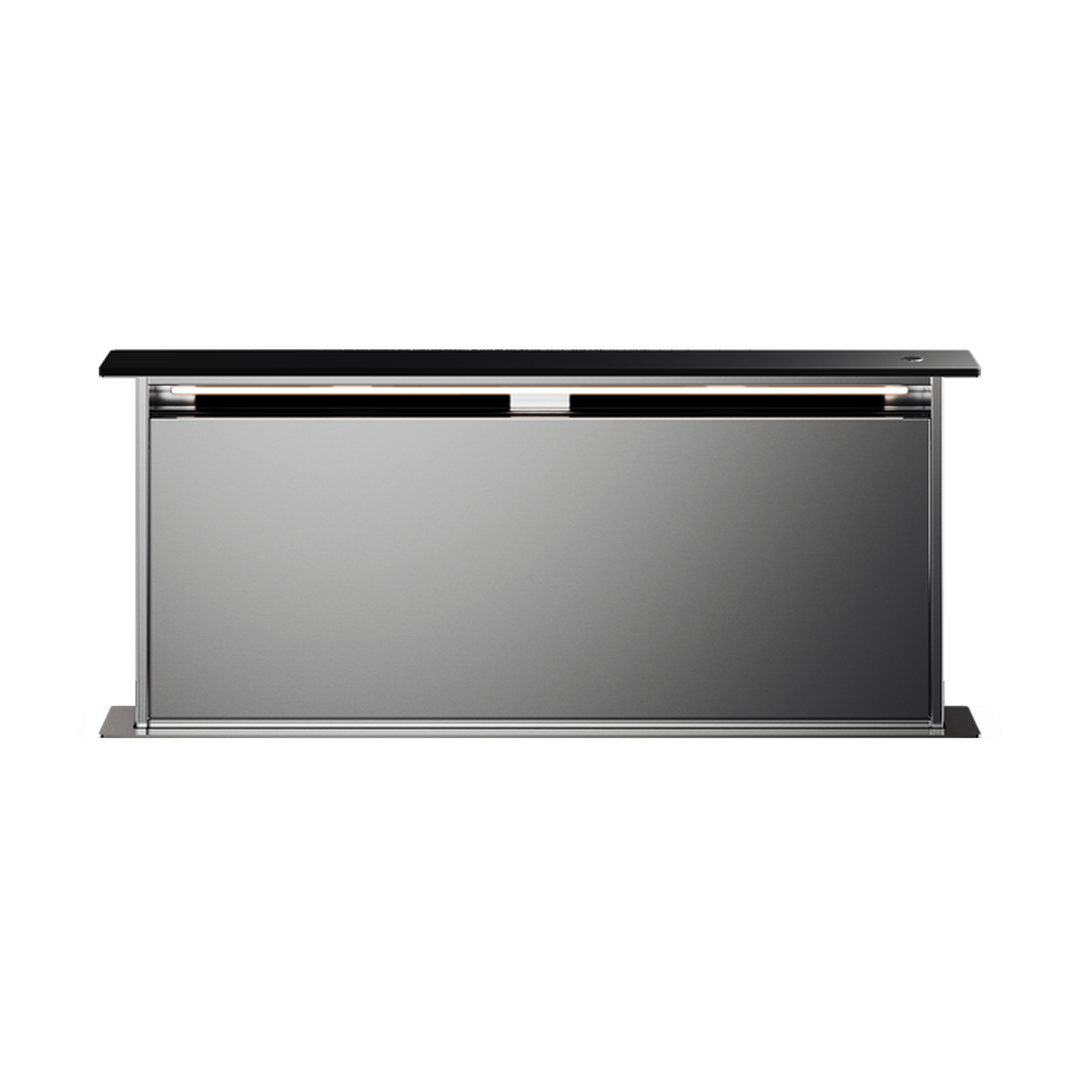
Rising from the worktop only when required, the downdraft hood extracts at the source before retracting seamlessly from view. A refined solution for islands and open layouts, where overhead extraction would otherwise interrupt the sightline.
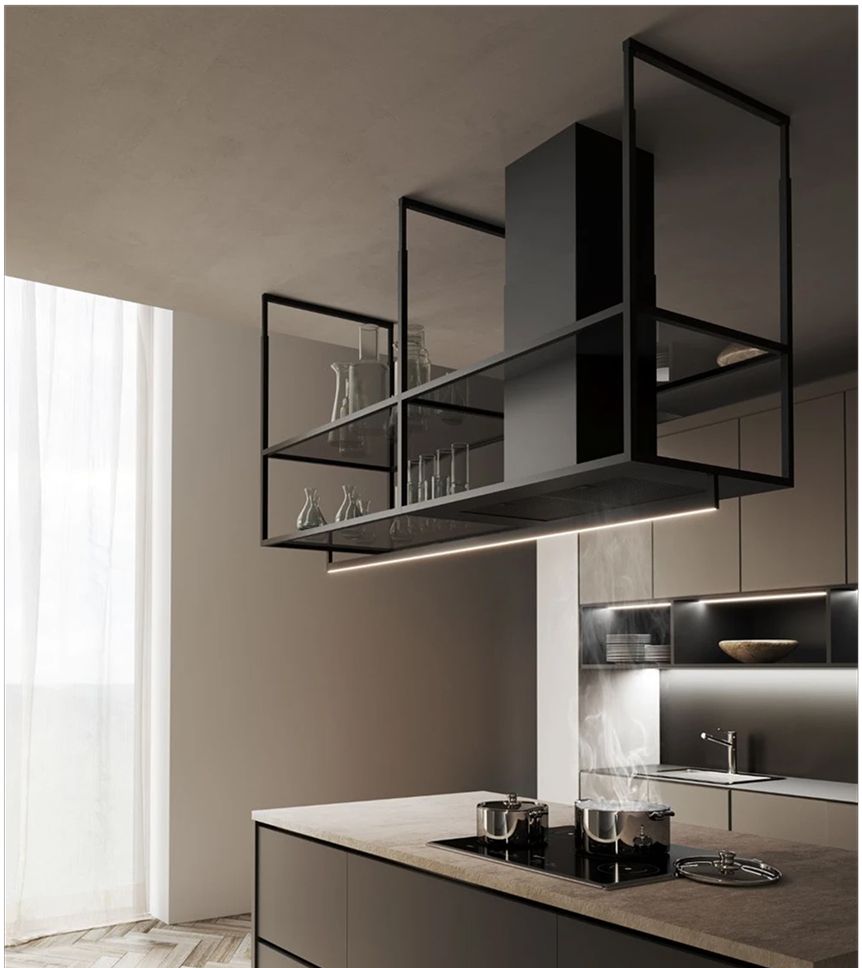
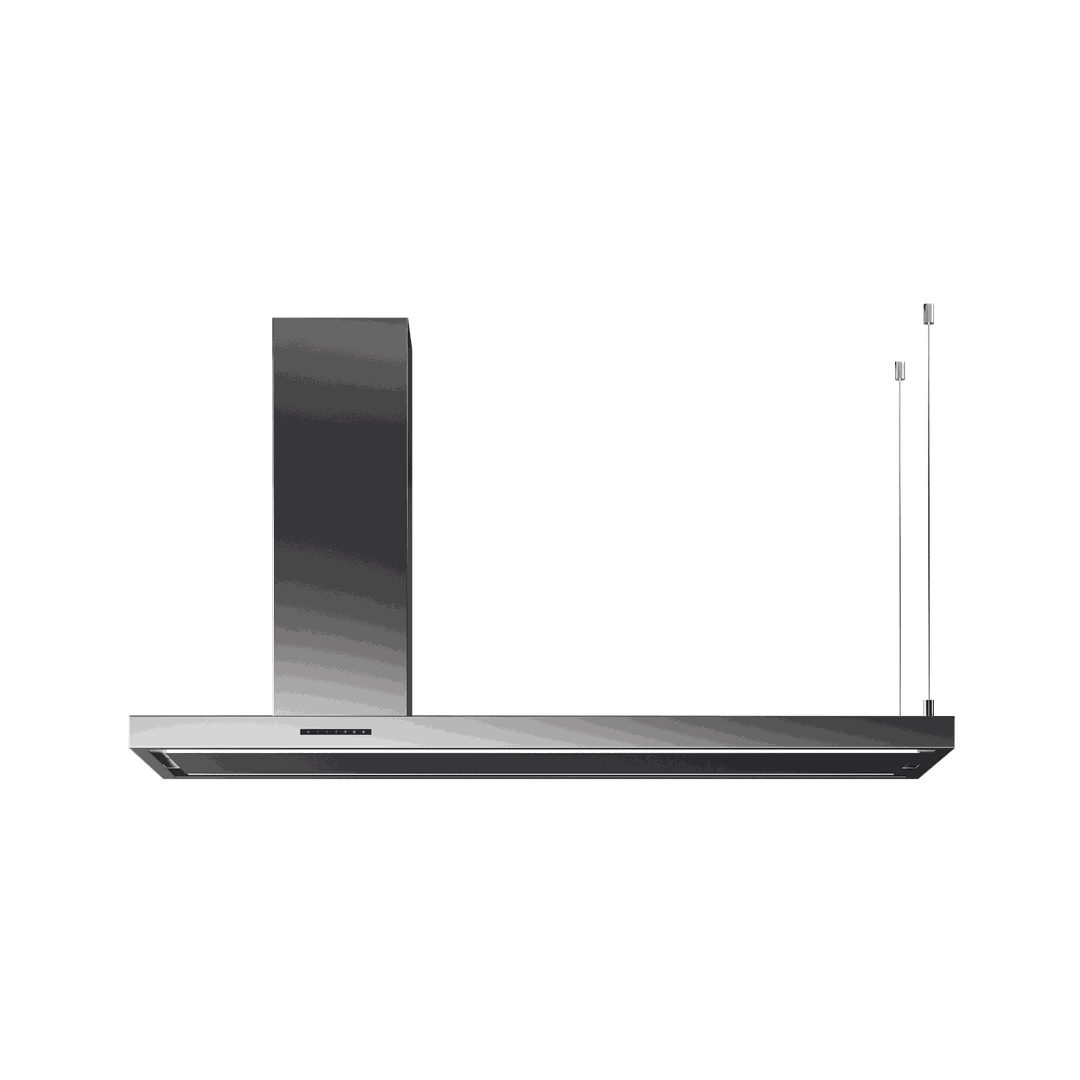
Island
Suspended above a central island, the island hood is visible from every angle and conceived as a centrepiece. Assured extraction and considered form combine to anchor the heart of an open-plan kitchen.
)
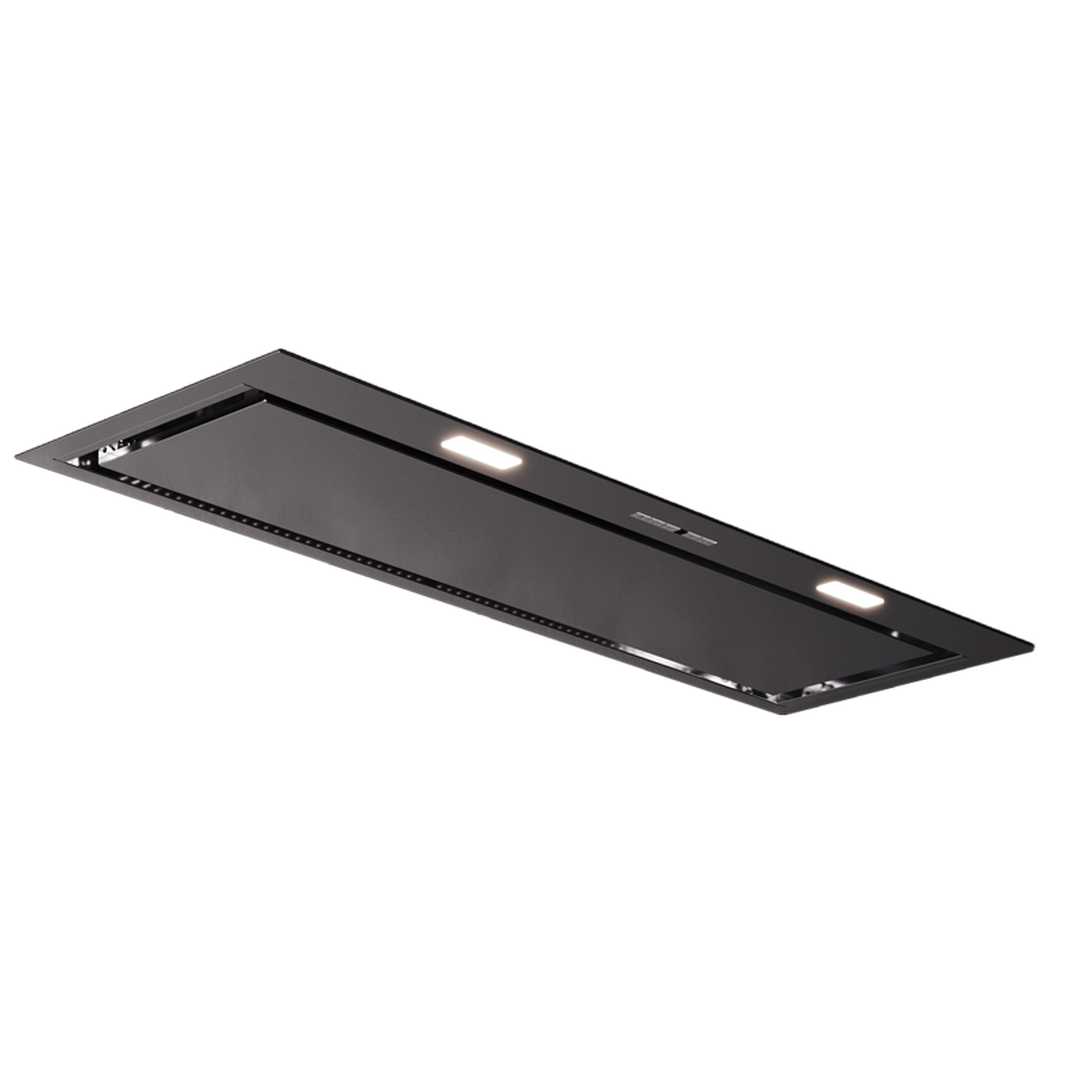
Ceiling
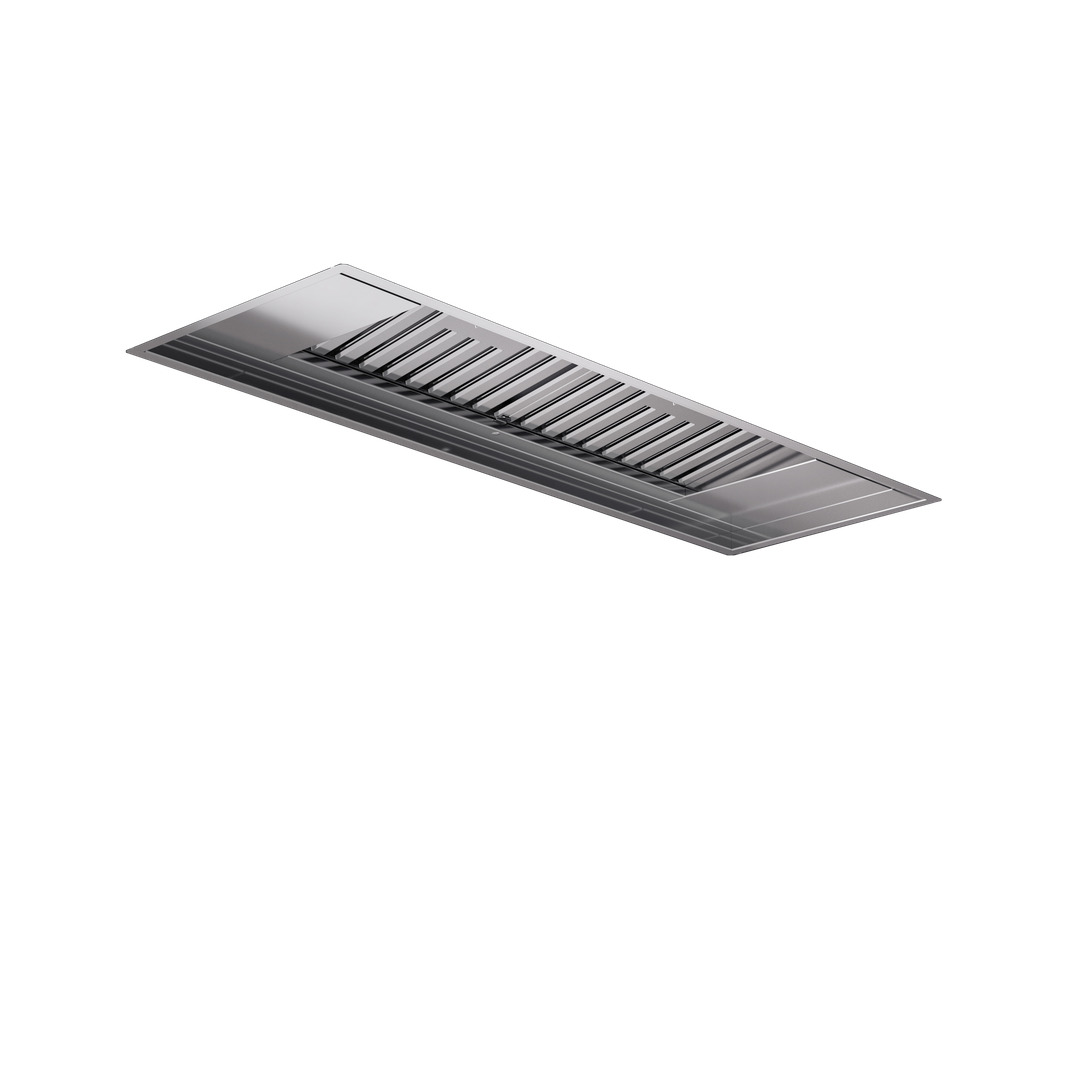
Integrated flush into the ceiling, this hood draws across the entire cooking zone while remaining all but invisible. Extraction becomes part of the architecture — present in performance, absent in appearance.
)
Extractor Hob
Uniting induction cooking and extraction within a single surface, the extractor hob captures steam and vapour at the very point they arise. The result is an uncluttered worktop, an unbroken sightline, and exceptionally effective ventilation.
Choose from a variety of hoods to suit your layout
Frequently asked questions about our hoods
The right hood depends heavily on your kitchen layout and cooking style. For an island used mainly for light cooking, a downdraft extractor or a ceiling hood offers a clean, unobtrusive look. For the best performance over an island, we recommend a T-shaped island hood, which captures steam and cooking odours far more effectively.
In Lebanon, we always recommend a ducted hood, which extracts cooking fumes outside and is best suited to the heavier cooking style common in Lebanese homes. Where ducting is not possible, a recirculating hood with carbon filters is the alternative, filtering the air before returning it to the kitchen.
Yes, and we are big fans of built-in hoods. Integrated into the cabinetry, they keep the kitchen clean and uncluttered while remaining highly efficient, especially professional models such as our Regolo.
Downdraft extractors are excellent, rising from or integrating into the worktop to extract directly at the cooking surface. However, they are designed mainly for induction hobs, which limits your cooking options in Lebanon, where gas remains the main way of cooking.
We recommend a minimum extraction capacity of 700 m³/h for any kitchen. For heavier cooking or larger open-plan spaces, a professional hood with 1,200 m³/h or more delivers the performance needed.
A hood should be at least as wide as the hob, and ideally wider, particularly over a gas hob. As a general guide, it should be installed around 65 to 75 cm above a gas hob and 55 to 65 cm above an induction hob, and our installers always follow each manufacturer’s specific requirements.
Duct size must match the hood’s extraction capacity. A domestic hood of 700 m³/h requires a 6-inch (150 mm) duct, while a professional hood of 1,200 m³/h or more requires an 8-inch (200 mm) duct.
This is one of the most common issues we see, and it is rarely the hood alone. A hood’s performance is only half of the story; the ducting is the other half. An undersized duct, a long route or several bends restrict airflow and significantly reduce extraction, which is why we plan the ducting as carefully as the hood itself.
Grease filters should be cleaned regularly, and most are dishwasher-safe. If your hood uses recirculation, the carbon filters need replacing periodically, as indicated by the hood or the manufacturer, to keep filtering effectively.
Island hood installation is carried out in two stages, both free of charge. We first install the support structure before the false ceiling is completed, then return to fit the hood once the ceiling is finished.
Delivery and installation are free of charge anywhere in Lebanon, including island hoods, and every hood is covered by a two-year warranty. We can also remove and dispose of your old hood at no extra cost.